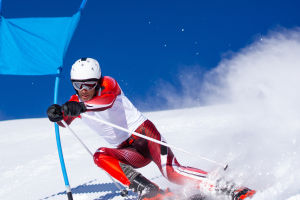
Hello there, readers. Short track corners look simple from the stands, just a body leaned over and a blade carving an arc.
But the physics under that arc are what separate a skater who coasts through the turn from one who carries speed out of it, and the difference shows up on every lap.
Why the lean feels wrong at first
You'll feel the urge to stay upright when you enter a corner at speed. That instinct works against you. Short track corners are skated at a lean angle that can pass 45 degrees from vertical, and the faster you go, the more you need to commit to that angle. Skaters at the elite level, the ones chasing times in the 500m, hold that edge through the entire apex. If you straighten up halfway through, you lose contact with the ice and your blade starts to chatter. Trust the lean and let the corner come to you.
The crossover that earns speed
Do not just glide around the corner on two edges. The crossover is what keeps your speed up. Your outside leg crosses over the inside leg, pushing the blade under your body, and each push adds a small amount of acceleration. A clean crossover sequence in a short track corner runs about three to four pushes per turn on a standard 111 meter oval. Get the timing wrong, cross too early, and your skates tangle. Cross too late and you lose the push entirely.
Where your weight actually sits
Most beginners put their weight on the heels during a corner. That's the mistake. Weight belongs over the ball of the foot, with the ankle flexed forward so the blade's rocker can follow the curve. If your heel takes the load, the blade flattens and the turn gets sluggish. Watch any skater struggle through a corner and you'll usually see the heel drop first. Fix the ankle position and the rest of the turn cleans up faster than you'd expect.
Reading the entry line
The corner doesn't start at the turn itself. It starts on the straightaway. Your entry line determines how much room you have through the apex. Enter too wide and you'll run out of ice before the exit. Enter too tight and you'll clip the blocks. Skaters build a consistent entry point, often two to three blade lengths off the boards, and repeat it lap after lap. Consistency there is worth more than any single fast lap.
Drills that build the feel
Try a simple progression. Skate half laps at moderate speed and focus only on the ankle flex, no crossovers. Then add crossovers at the same speed. Then push the pace. Short track coaches use this sequence because it lets you feel each piece separately before combining them. Another useful drill is skating figure eights on a small area, which forces you to switch edges quickly and keeps your weight forward.
What the blades are doing
Short track blades are offset to the left, and that offset matters in the corners. The blade sits slightly inside the boot's center line so the left skate can hold a deeper edge without the boot dragging. If you've only skated on hockey or figure skates, the offset will feel odd for the first few sessions. Give it time and your body adjusts. Most skaters notice the difference within a couple of hours on the ice.
The corner is where short track races are won, and it rewards patience more than raw power. Work on your ankle position first, then the crossover timing, then the entry line, and the speed will follow. Next time you step on the ice, spend one full session on nothing but the turn. You'll feel the difference before the lap times show it.