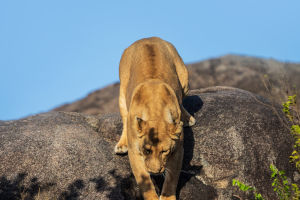
When daylight fades across the African savanna, a silent transition begins. Heat dissolves into cool air, shadows stretch across the grasslands, and a different rhythm takes over.
For the lion, this is not just a change in scenery—it is the optimal moment to act. Night hunting is not accidental behavior. It is a refined survival system shaped by physiology, prey dynamics, and environmental pressure.
Built for the Dark
Lions possess a visual system designed to function where light is scarce. A reflective layer in their eyes, known as the tapetum lucidum, amplifies available light and allows them to detect movement even under faint moonlight. This gives them a distinct advantage over prey species that rely more heavily on daylight vision.
In darkness, contrast replaces clarity. Shapes and motion matter more than detail, and lions excel in this environment. Their forward-facing eyes enhance depth perception, allowing them to judge distance precisely before launching an attack. This capability is crucial because their hunting success depends on closing the gap undetected.
Heat, Energy, and Survival Efficiency
Daytime conditions in the savannah are often unforgiving. Temperatures regularly climb above 30°C, turning physical exertion into a costly risk. Lions, with their heavy muscle mass, cannot afford prolonged chases in such heat. Instead, they conserve energy during the day—resting in shade, minimizing movement, and waiting for conditions to improve.
Nightfall brings cooler air, which changes everything. Muscles perform more efficiently, breathing stabilizes, and endurance increases just enough to support coordinated hunts. This energy economy is critical. A failed hunt burns calories that are not easily replaced. By hunting when the environment reduces physical strain, lions tilt the balance toward success.
Masters of the Ambush
Unlike endurance predators, lions rely on stealth and explosive power. Their bodies are built for short bursts of speed, not long-distance pursuit. This makes proximity everything. Night provides the perfect cover. Their tawny coats blend into the muted tones of the savannah, and reduced visibility limits how early prey can detect danger.
Lions move low to the ground, using terrain, shadows, and vegetation to stay hidden. They may spend long minutes—or longer—closing in. When the final charge comes, it is sudden and decisive. The closer they start, the higher the chance of a successful takedown. Darkness, in this sense, is not just helpful—it is essential.
Strength in Numbers
Lions are unique among big cats for their social structure. Living in prides allows them to hunt cooperatively, a trait that becomes even more effective at night.Under low-light conditions, individuals can spread out without immediately alerting prey. Some lions subtly guide movement, while others position themselves ahead for an ambush.
This level of coordination requires timing, awareness, and communication—often achieved through quiet signals rather than sound. This teamwork enables them to target larger animals such as buffalo, which would be extremely risky for a single hunter. At night, confusion among prey increases, giving coordinated lions the upper hand.
Exploiting Prey Limitations
Herbivores do not become helpless after dark, but their strategies shift. Many rely more on hearing and smell, while reducing movement to avoid drawing attention. Herds often cluster together, hoping safety in numbers will offset limited visibility. However, this adaptation has weaknesses. In low light, it becomes harder to detect direction and distance.
A sudden disturbance can trigger confusion, and coordinated escape becomes less effective. Lions exploit these gaps. Their silent approach and synchronized attacks disrupt herd structure, isolating individuals before a proper response can form.
Timing Around Competition
The African night is not empty—other predators are active too. Hyenas, leopards, and smaller carnivores all compete for food. Lions must consider not only how to catch prey, but also how to keep it. By choosing specific windows of activity, lions can reduce direct confrontation or position themselves advantageously.
In some cases, their sheer group strength helps them defend what they have taken. Avoiding unnecessary conflict is just as important as hunting itself. Injuries can be life-threatening in the wild, so strategic timing helps minimize risk.
Higher Success When It Matters Most
Field observations consistently show that lions achieve better hunting outcomes at night. This is not due to a single factor, but the combined effect of improved vision, reduced heat stress, enhanced stealth, and prey vulnerability. Every hunt is a calculation. Energy spent must be justified by the likelihood of success. Nighttime offers the best odds, allowing lions to maintain strength over time and support the needs of the pride.
What It Means for Safari Experiences
For travelers, this behavior reshapes expectations. While daytime safaris offer remarkable sightings, the most dynamic predator activity often occurs after dark. Parks like Lake Mburo National Park and Queen Elizabeth National Park provide guided night drives where this hidden world comes alive.
Under spotlight beams, the savannah reveals a different rhythm—subtle movements, glowing eyes in the distance, and the quiet tension of predators at work. Observing lions in this setting offers a more complete understanding of how they truly survive.
Lions are often seen as symbols of raw power, but their success depends far more on precision than force. Night hunting is not simply a preference—it is a refined adaptation shaped by evolution, environment, and cooperation.